
Participatory roundtable & role-play workshop – 21 January, Cape Town
The International Ocean Institute of Southern Africa and AfriSeas Solutions hosted a one-day participatory roundtable and role-play workshop on the 21st of January 2026, to explore the interpretation and application of ocean accounting in strengthening decision-making for Marine Spatial Planning (MSP) processes.
Located at the SANBI Research Centre in Kirstenbosch Gardens, the workshop brought together diverse perspectives of 25 participants from various sectors. At the outset, participants were introduced to the principles and application of ocean accounting, with a focus on how it can support valuations for trade-off analysis across environmental, economic and social domains, and transparent, evidence-based decisions in Marine Spatial Planning.
To encourage understanding, the key component of the day was an active participatory role-play simulation, with participants taking on roles of different ocean sectors (consumptive commercial and subsistence fisheries, non-consumptive dive tourism, ocean conservation and terrestrial pressures) and stakeholder groups for a hypothetical country scenario. Working with simplified ocean accounting information supplied as maps, and annual statistics (and therefore benchmarked indicators), participants were guided through a process of identifying relative trends in the sectoral economic, social and spatial environmental data to inform trade-off decisions across economic, social and environmental domains. Importantly stocks within domains (e.g. revenue, employment, ecosystem condition and extent etc.) change through flows between domains, allowing decisions to be evidenced by information that goes beyond economic criteria only.
Group decisions took ocean resources, resource-uses and associated pressures and impacts (on resources and future resource-uses) into consideration in the development of a Marine Spatial Plan.
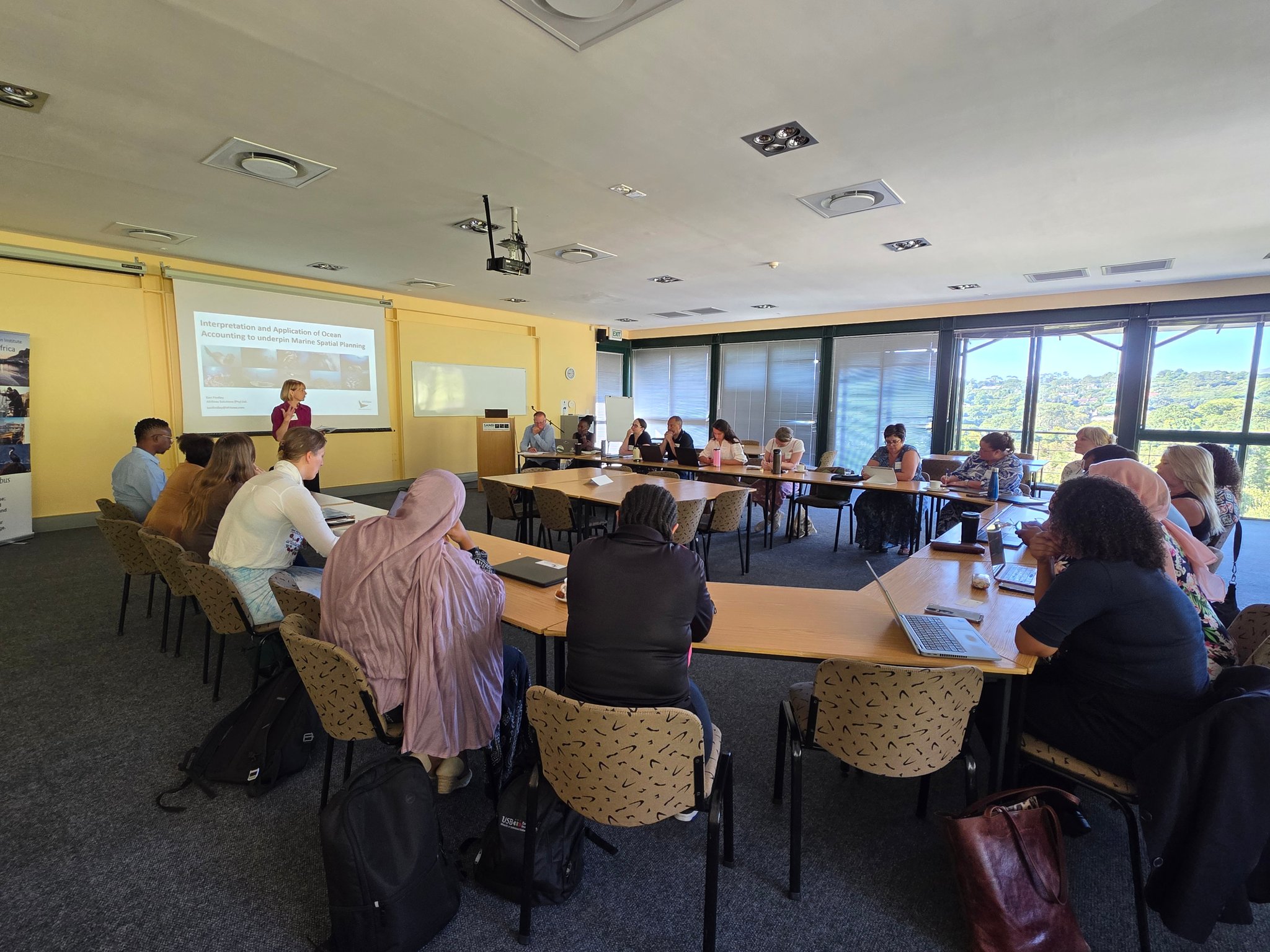
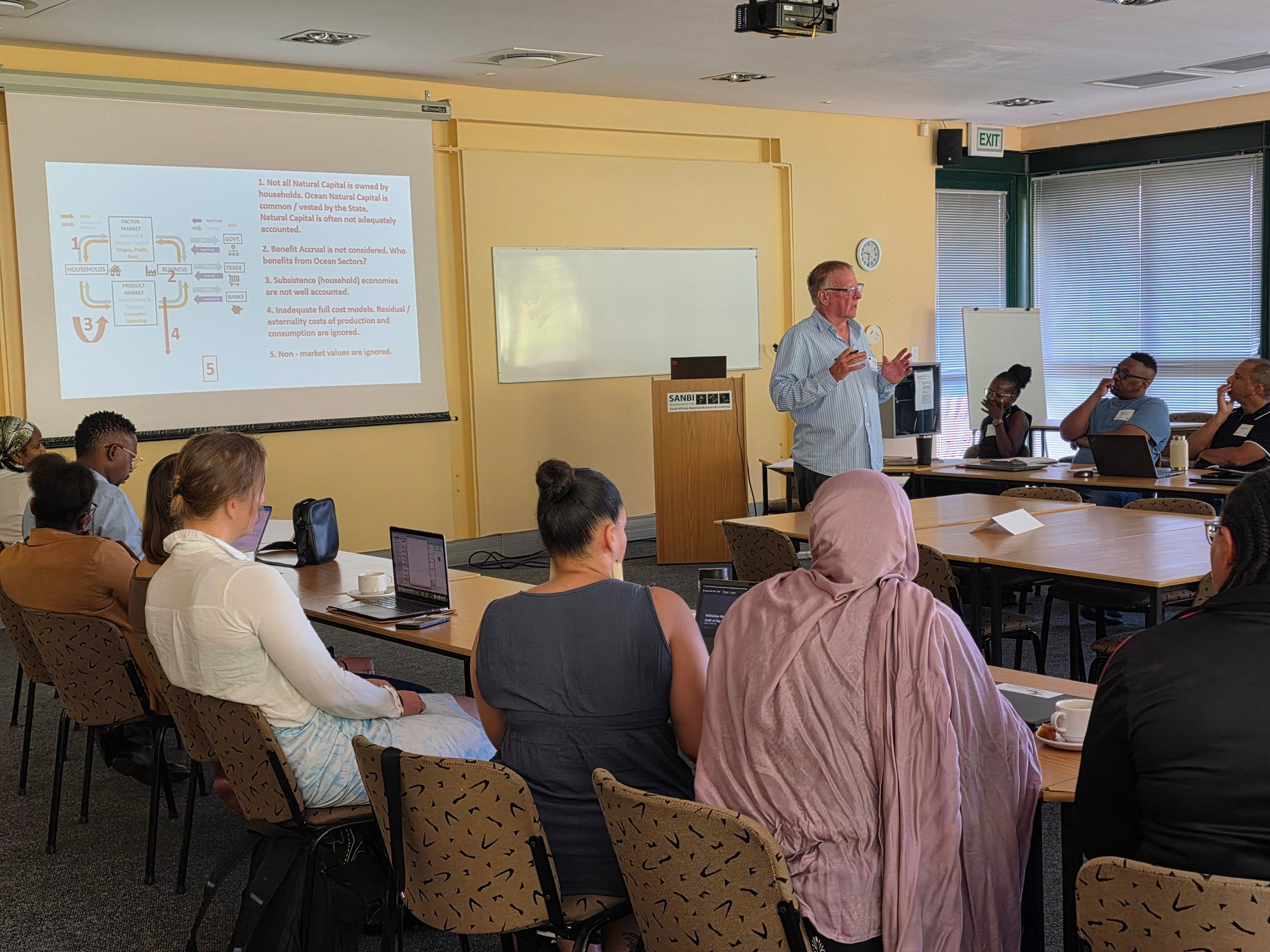
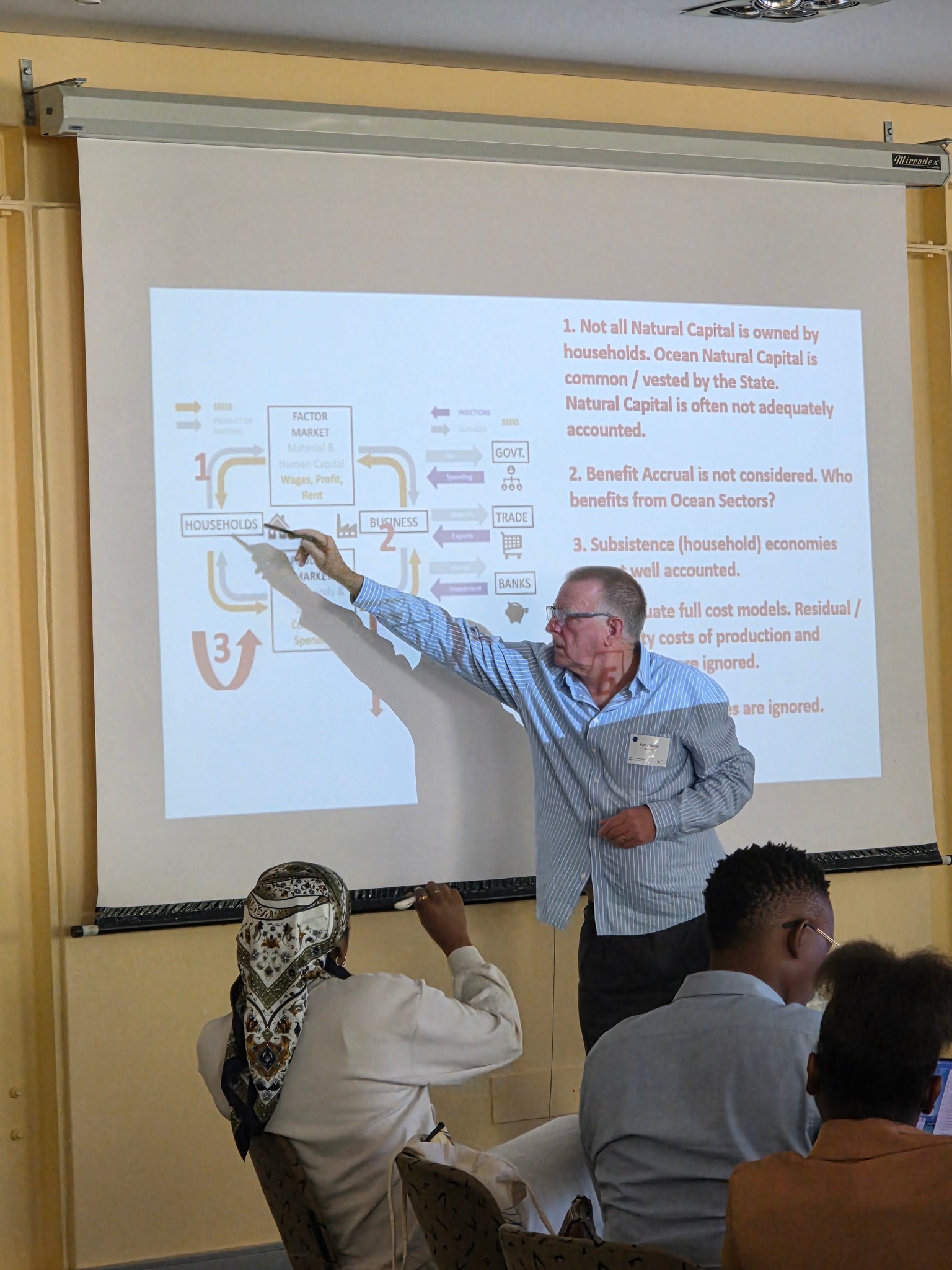
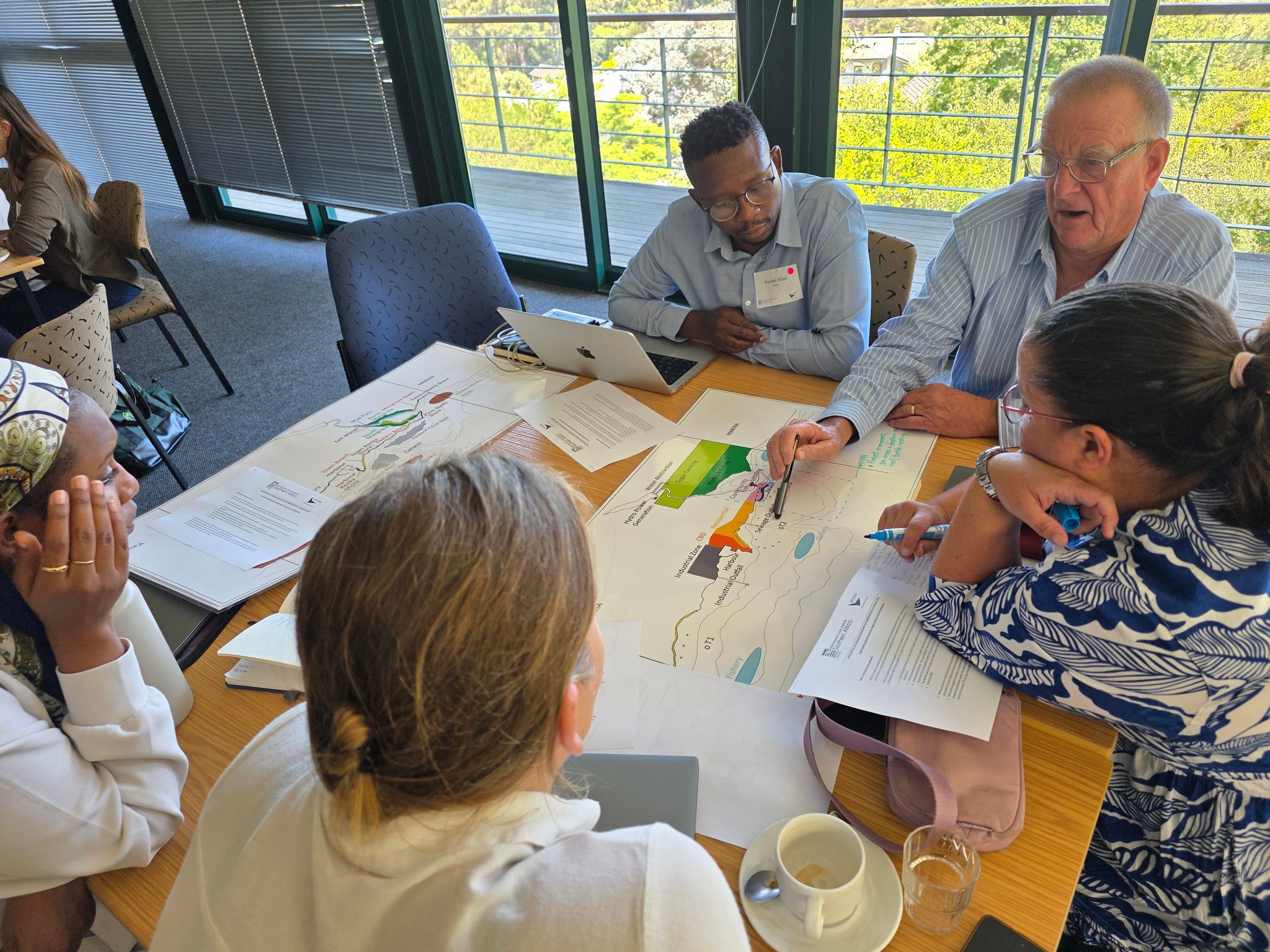
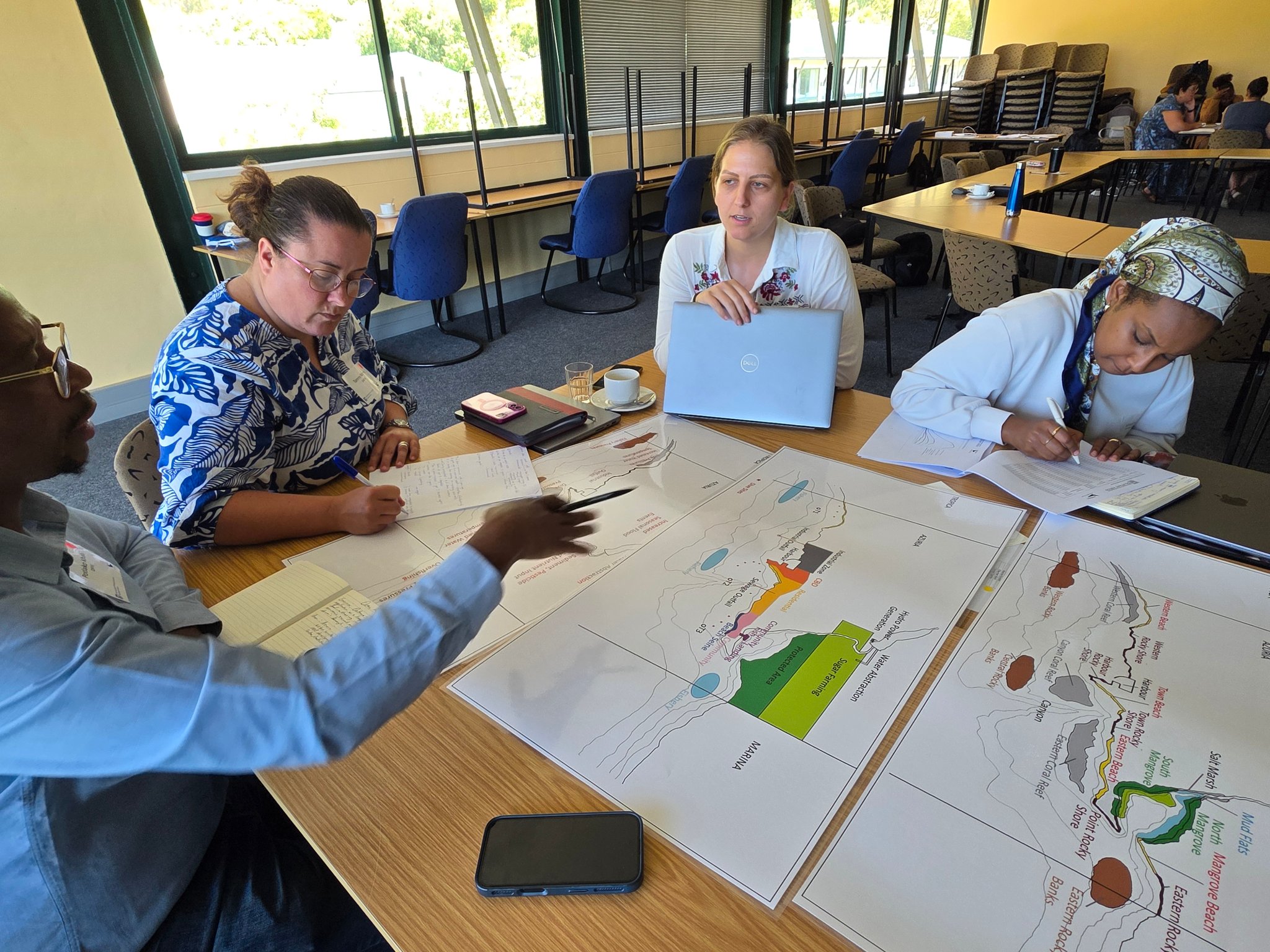
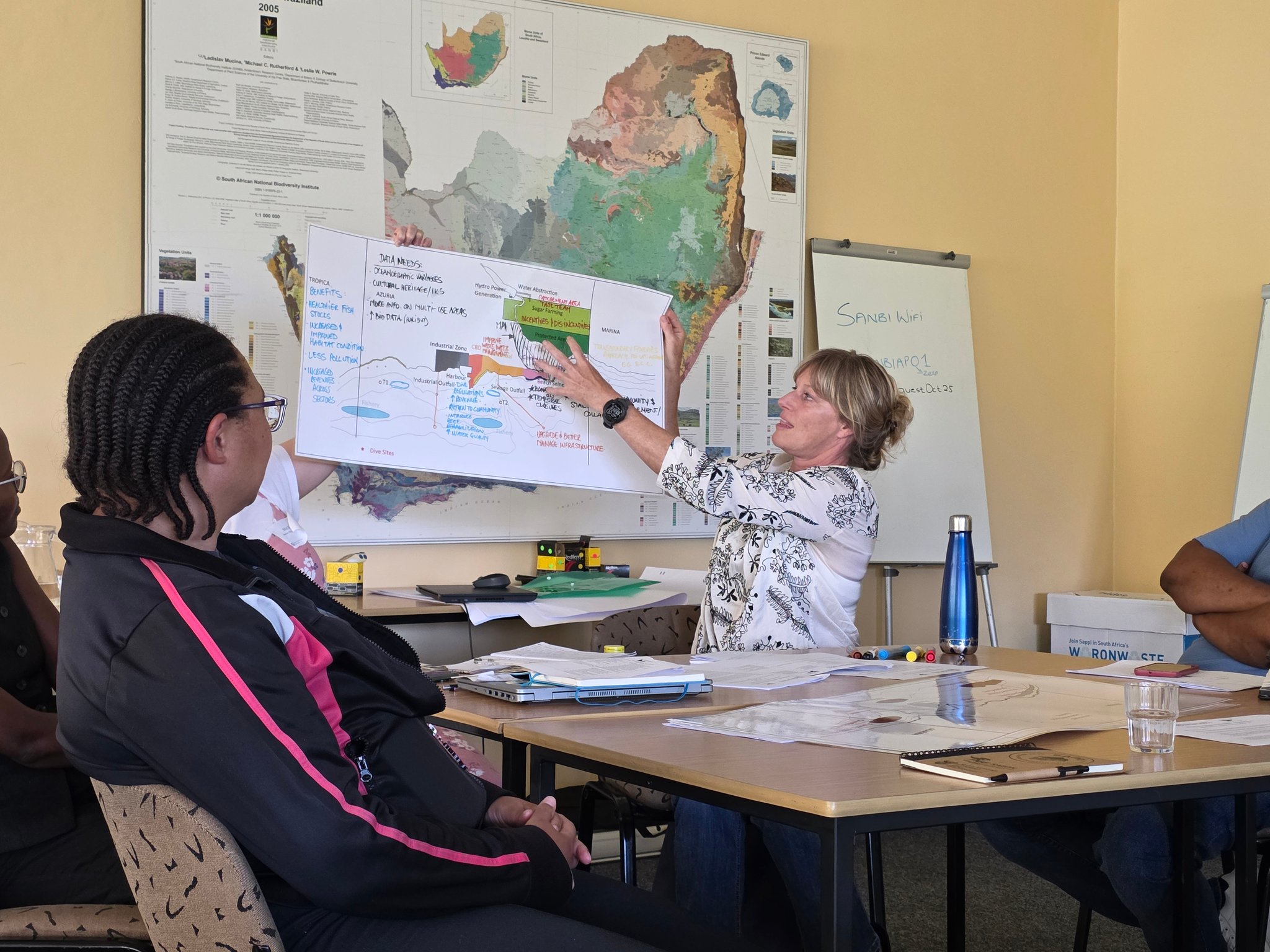
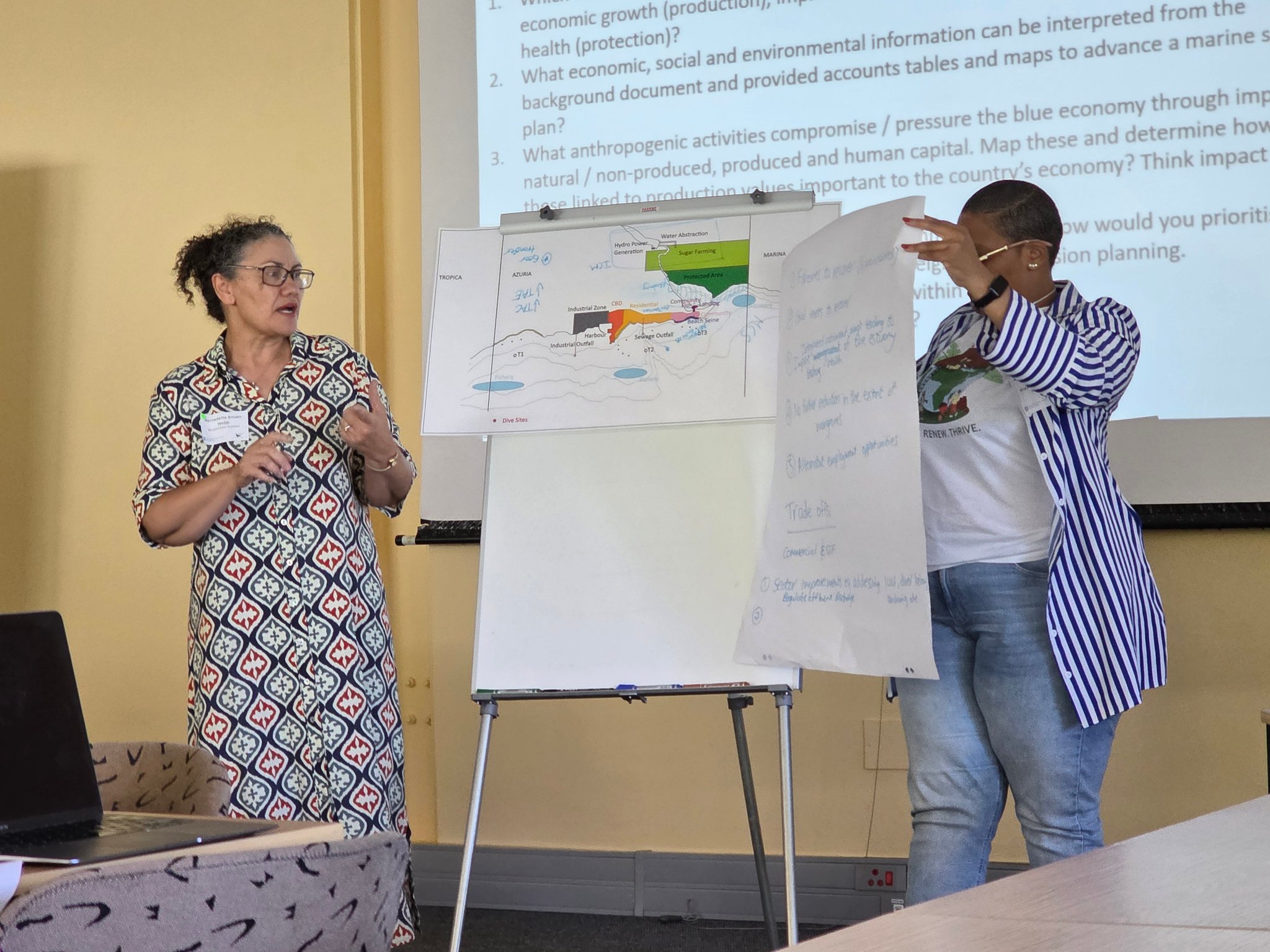


The final workshop session provided an opportunity to reflect on learnings from the day and broader implications. Participants strongly agreed that the role-play exercise was an effective and engaging way to explore the potential application of ocean accounting within marine spatial planning (MSP). Workshop facilitators noted a far greater uptake of the understanding of ocean accounting through role play participation than through lecture or only information sharing. Role play helped clarify both the value of ocean accounts as a decision-support tool and the practical challenges associated with its application. There was a strong sense that the workshop should be made available to a broader audience, and could be further developed into a 2-day, or longer training session.
Reflections also centred on the value of using ocean accounting as a tool in South Africa’s MSP process, the challenges of making this a reality, and the need for a roadmap to develop the necessary data sets and institutional capacity, actors and responsibilities. In particular we were encouraged by the participation of active ocean decision makers from the South African MSP space.